
Shopify CRO Tips and Techniques Used by High-Converting Stores
In today’s competitive eCommerce landscape, driving traffic to your Shopify store is only half the battle. The real challenge lies in converting visitors into customers. That’s where Shopify Conversion Rate Optimization (CRO) comes in. High-performing Shopify brands understand that increasing conversions often delivers a higher return on investment than simply increasing traffic. Whether you’re working […]
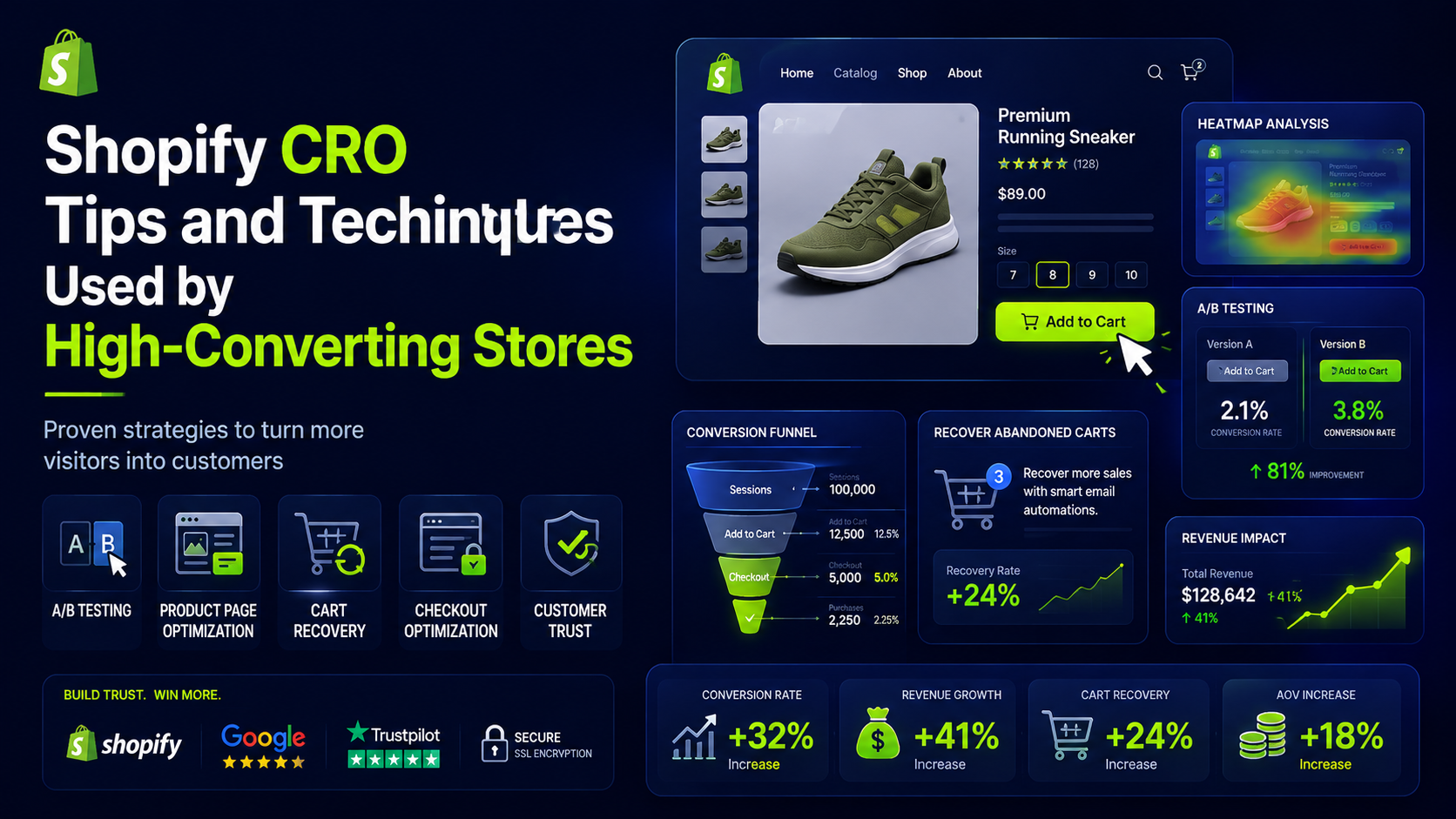
In today’s competitive eCommerce landscape, driving traffic to your Shopify store is only half the battle. The real challenge lies in converting visitors into customers. That’s where Shopify Conversion Rate Optimization (CRO) comes in.
High-performing Shopify brands understand that increasing conversions often delivers a higher return on investment than simply increasing traffic. Whether you’re working with a Shopify Conversion Rate Optimization Agency USA or managing optimization efforts in-house, implementing proven CRO techniques can significantly improve revenue without increasing advertising spend.
This guide explores the Shopify CRO tips and techniques used by high-converting stores and explains how they fit into a broader e-commerce marketing strategy.
Why Shopify CRO Matters for eCommerce Growth
Shopify CRO focuses on improving the percentage of visitors who complete a desired action, such as making a purchase, signing up for a newsletter, or adding products to their cart.
Many successful brands partner with Shopify conversion rate experts because even small improvements in conversion rates can generate substantial revenue growth. A well-executed Shopify conversion strategy helps businesses maximize the value of every visitor while reducing customer acquisition costs.
When combined with a strong e-commerce growth strategy, CRO becomes one of the most profitable investments for scaling an online store.
1. Optimize Site Speed for Better User Experience
Website speed directly impacts conversions. Research consistently shows that slower pages lead to higher bounce rates and abandoned carts.
High-converting Shopify stores focus on:
- Compressing images
- Removing unnecessary apps
- Using fast-loading themes
- Optimizing code performance
Site speed improvements are a critical part of Shopify store optimization because customers expect seamless shopping experiences across all devices.
2. Simplify Navigation and Product Discovery
Customers should find products quickly and effortlessly.
Leading conversion-focused Shopify agency teams prioritize:
Clear Menu Structures
Organize products into logical categories and collections.
Smart Search Functionality
Enable predictive search and product filtering.
Optimized Collection Pages
Use SEO-friendly collection pages that support both conversions and E-commerce SEO marketing for Shopify initiatives.
Better navigation reduces friction and encourages visitors to browse deeper into your store.
3. Improve Product Pages with Conversion-Focused Content
Product pages often determine whether a visitor becomes a customer.
High-converting stores invest heavily in:
- Benefit-driven product descriptions
- High-quality images
- Product videos
- Customer reviews
- Trust badges
- Clear return policies
Businesses looking to improve product page performance often begin with a comprehensive Shopify CRO Checklist to identify conversion gaps and optimization opportunities.
4. Leverage Shopify UX Optimization
User experience has become one of the most important ranking and conversion factors.
Effective Shopify UX optimization includes:
Mobile-First Design
More than half of eCommerce traffic comes from mobile devices. Every page should be designed with mobile users in mind.
Clear Calls-to-Action
Your “Add to Cart” and checkout buttons should stand out and guide users naturally through the buying process.
Reduced Checkout Friction
Simplify forms, offer multiple payment methods, and eliminate unnecessary checkout steps.
Brands investing in professional Shopify Website Design services often see significant improvements in both user engagement and conversion rates.
5. Use Data to Guide Optimization Decisions
Successful CRO is driven by data, not assumptions.
Top Shopify conversion optimization services use:
- Heatmaps
- Session recordings
- Customer surveys
- A/B testing
- Analytics platforms
Before making major design or content changes, conducting a thorough CRO audit helps identify the biggest barriers preventing conversions.
Data-driven insights allow businesses to prioritize changes that deliver measurable results.
6. Increase Average Order Value with Upsells and Bundles
Improving conversion rates isn’t the only goal. High-converting stores also focus on maximizing revenue per customer.
Popular techniques include:
- Product bundles
- Cross-sells
- Post-purchase offers
- Frequently bought together recommendations
Strategic upsells and bundles for Shopify stores can significantly increase average order value while enhancing the customer experience.
This approach aligns perfectly with modern performance marketing for eCommerce strategies focused on profitability.
7. Build Trust Throughout the Buying Journey
Trust is one of the most powerful conversion drivers.
High-performing stores consistently display:
- Verified customer reviews
- Secure payment icons
- Money-back guarantees
- Shipping information
- Contact details
These trust signals reduce purchase anxiety and encourage first-time buyers to complete their orders.
Trust-building elements should appear throughout the customer journey, not just during checkout.
8. Align CRO with Your Shopify Marketing Strategy
CRO works best when integrated into a broader Shopify marketing strategy.
Many businesses focus heavily on traffic generation through SEO, paid advertising, and social media but neglect conversion optimization.
The most successful brands combine:
- Data-driven eCommerce marketing
- Conversion optimization
- SEO
- Email marketing
- Retention campaigns
This holistic approach ensures that traffic acquisition and conversion efforts work together to maximize revenue.
Common CRO Mistakes Shopify Stores Should Avoid
Even established brands make CRO mistakes that hurt performance.
Common issues include:
- Cluttered page layouts
- Weak product descriptions
- Slow loading speeds
- Complicated checkout processes
- Poor mobile experiences
- Ignoring analytics data
Working with an experienced eCommerce CRO agency USA can help identify and eliminate these obstacles before they impact growth.
Conclusion
Shopify CRO is not about making random design changes. It requires a strategic, data-driven approach focused on improving the customer journey at every stage.
From site speed optimization and UX improvements to upsells, testing, and trust-building, high-converting stores continuously refine their Shopify conversion strategy to increase revenue and improve customer experiences.
Businesses looking to accelerate growth through expert Shopify conversion optimization services can learn more about Webspirit and discover how a performance-focused CRO strategy can unlock higher conversions and long-term eCommerce success.
FAQs
What is Shopify Conversion Rate Optimization (CRO)?
Shopify CRO is the process of improving your store’s user experience, design, and content to increase the percentage of visitors who complete a desired action, such as making a purchase.
Why should I hire a Shopify Conversion Rate Optimization Agency USA?
A specialized agency provides data-driven insights, testing expertise, and proven strategies to improve conversions, revenue, and customer experience.
What do Shopify conversion optimization services include?
Services typically include CRO audits, A/B testing, UX improvements, checkout optimization, analytics reviews, and conversion-focused design enhancements.
How does Shopify UX optimization improve conversions?
Better UX reduces friction, improves navigation, and creates a smoother shopping experience, which encourages more visitors to complete purchases.
How often should I conduct a CRO audit?
Most growing eCommerce stores should perform a CRO audit every 6 to 12 months or whenever significant performance changes occur.
Can CRO improve the results of my e-commerce marketing strategy?
Yes. CRO helps maximize the value of existing traffic, improving ROI across SEO, paid advertising, email marketing, and other acquisition channels.
What is the difference between SEO and CRO?
SEO focuses on driving more traffic to your website, while CRO focuses on converting that traffic into customers. Both are essential for sustainable eCommerce growth.