
UX for eCommerce Stores: What It Is & How It Affects User Flow
When customers visit an online store, they expect a simple and smooth shopping experience. If pages take too long to load, navigation feels confusing, or checkout becomes difficult, many shoppers leave without making a purchase. This is where UX for eCommerce stores plays an important role. User Experience (UX) refers to how people interact with […]
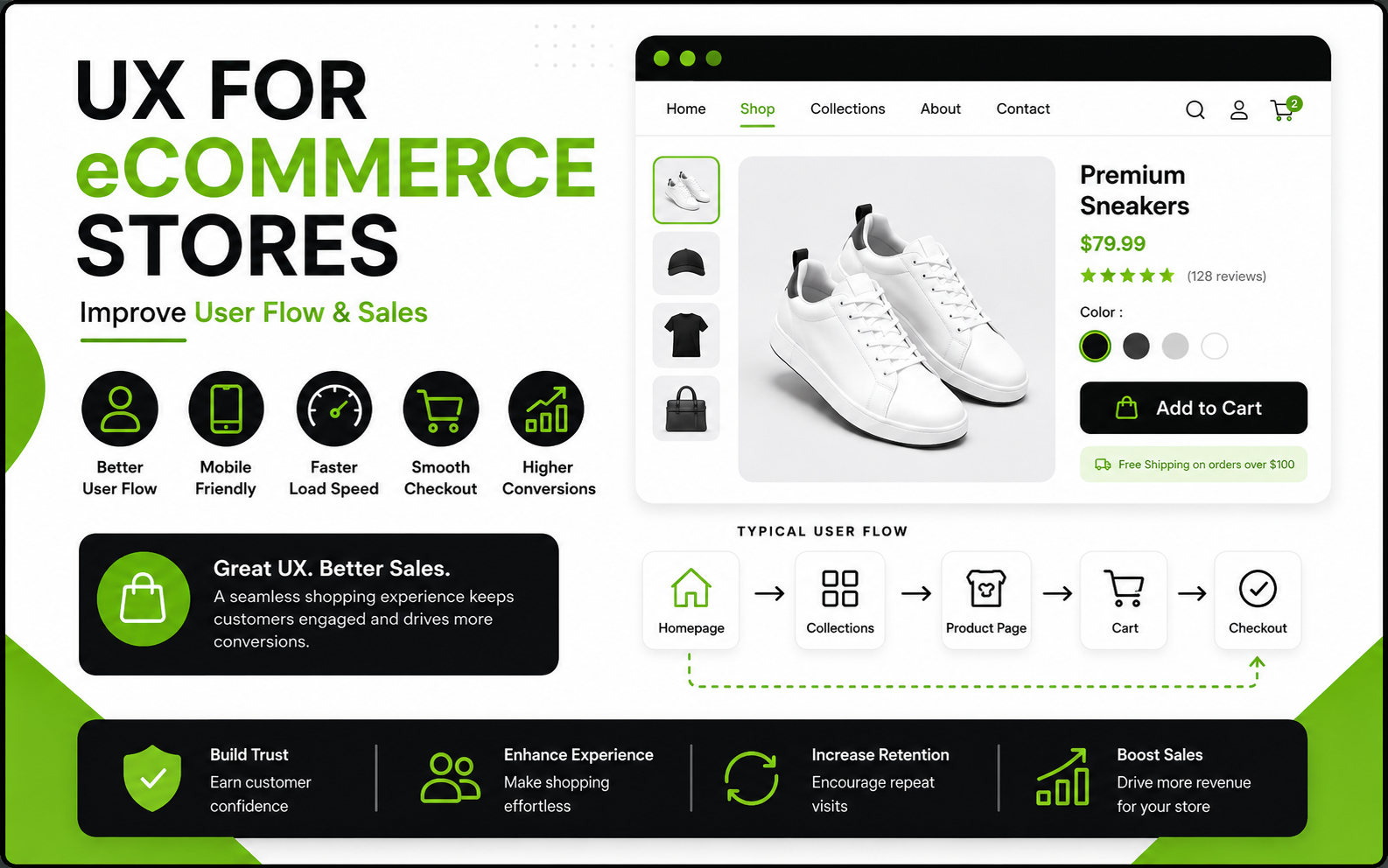
When customers visit an online store, they expect a simple and smooth shopping experience. If pages take too long to load, navigation feels confusing, or checkout becomes difficult, many shoppers leave without making a purchase. This is where UX for eCommerce stores plays an important role.
User Experience (UX) refers to how people interact with your online store. Good UX helps visitors find products, understand information, and complete purchases without frustration. A poor experience can create obstacles that interrupt the buying journey and reduce conversions. For Shopify store owners, investing in user experience is not only about design. It is about improving customer journeys, reducing friction, and creating a store that supports business growth.
What Is UX in eCommerce?
UX, or User Experience, covers every interaction a customer has with an online store.
This includes:
- Website navigation
- Product discovery
- Search functionality
- Mobile responsiveness
- Product page layout
- Checkout process
- Site speed
- Overall usability
A strong UX helps customers move naturally from browsing to purchasing. Instead of forcing visitors to figure things out, a well-designed store guides them through the process. Many businesses invest in shopify website design services to improve these areas and create a better shopping experience for their customers.
Understanding User Flow in eCommerce
User flow refers to the path customers take while moving through an online store. A typical journey might begin when someone lands on the homepage, browses a collection page, views a product, adds it to their cart, and completes checkout. While this process sounds straightforward, many websites create obstacles that interrupt the journey. A visitor may struggle to find products, become frustrated by slow-loading pages, or leave because the checkout process feels too complicated.
Good UX helps remove these barriers. It guides visitors naturally from one step to the next and makes shopping feel effortless. Regular Shopify conversion funnel analysis can help identify where users drop off and which stages of the journey require improvement.
Why UX Matters for eCommerce Stores
Online shoppers have endless options. If a store feels difficult to use, customers can quickly move to a competitor.
Good UX helps businesses:
- Improve customer satisfaction
- Increase time spent on site
- Reduce bounce rates
- Encourage repeat visits
- Improve conversion rates
- Build trust with new customers
According to various eCommerce studies, users often make decisions about a website within seconds. A clean design and easy navigation can significantly influence whether they stay or leave. Many brands use a structured Shopify optimization checklist to review these performance factors and uncover opportunities for improvement.
Key UX Elements That Influence User Flow
1. Clear Navigation
Navigation acts as a roadmap for visitors. Customers should be able to find products quickly without searching through multiple pages.
Best practices include:
- Simple menu structures
- Logical product categories
- Easy-to-find search functionality
- Clear navigation labels
When navigation is easy, users move through the site with confidence.
2. Mobile-Friendly Design
A large percentage of online purchases now happen on mobile devices. If a store does not function properly on smaller screens, customers may abandon the site before reaching checkout.
Good mobile UX includes:
- Responsive layouts
- Fast-loading pages
- Easy-to-tap buttons
- Readable text
- Simple checkout forms
Businesses investing in shopify design services to prioritize mobile usability because it directly impacts sales performance.
3. Fast Website Speed
Speed is one of the most important UX factors. Customers expect pages to load almost instantly. Even a small delay can affect user engagement and conversion rates.
Common causes of slow websites include:
- Large image files
- Excessive apps
- Poor code optimization
- Unnecessary scripts
Improving site speed creates a smoother browsing experience and supports better user flow.
How Product Pages Affect User Experience
Product pages are often the most important part of an online store. When customers reach a product page, they are looking for answers. They want to understand what the product does, how it looks, what it costs, and whether it meets their needs.
A strong product page combines useful information with a clear layout. High-quality images, detailed descriptions, customer reviews, and transparent shipping details help build confidence. When shoppers can quickly find the information they need, they are more likely to continue toward checkout.
The Connection Between UX and Conversion Rates
UX and conversion rate optimization are closely connected. While conversion rate optimization focuses on increasing sales and customer actions, UX helps create a smoother shopping experience that encourages those actions. When visitors can easily navigate a store, find information quickly, and move through the buying process without confusion, they are more likely to complete a purchase.
On the other hand, usability issues can create friction that prevents customers from moving forward. This is why many successful Shopify brands continuously improve their user experience alongside ongoing optimization efforts to support higher conversion rates and long-term growth.
Common UX Mistakes That Hurt User Flow
Many eCommerce stores lose potential sales because of avoidable UX issues. Some of the most common issues include:
- Complicated navigation structures
- Slow-loading pages
- Difficult checkout processes
- Poor mobile usability
- Inconsistent page layouts
These issues create friction throughout the customer journey. Even small frustrations can influence buying decisions. A customer who cannot find product information quickly may leave before reaching the checkout page. Regular UX reviews can help identify these obstacles and create opportunities for improvement.
How to Improve UX for Your Shopify Store
Improving UX does not always require a complete redesign. Store owners can start by reviewing customer behavior and identifying areas where users experience friction. Analytics data, heatmaps, and session recordings often reveal valuable insights about how visitors interact with a website. In many cases, small improvements can make a noticeable difference. Simplifying navigation, improving page speed, updating product pages, and streamlining checkout are often effective starting points.
As a store grows, broader improvements such as eCommerce strategy planning, website design updates, and conversion optimization can help create a more consistent customer journey. At Webspirit, we often see that the most successful Shopify stores focus on the complete customer experience rather than individual website elements. When design, usability, SEO, and conversion optimization work together, businesses are better positioned for long-term growth.
Final Thoughts
UX is one of the most important factors influencing how customers interact with an eCommerce store. A positive user experience helps visitors find products faster, navigate the website more easily, and complete purchases with confidence. It also supports stronger engagement, higher conversion rates, and better customer retention. For Shopify store owners looking to improve performance, reviewing user flow is often one of the most valuable steps they can take.
Small improvements today can create a better shopping experience and stronger business results in the future. As competition continues to grow, brands that prioritize user experience will be in a stronger position to attract, engage, and convert online shoppers.
FAQs
What is UX in eCommerce?
UX in eCommerce refers to how customers interact with an online store. It includes navigation, product discovery, mobile usability, checkout experience, and overall website functionality that influences customer satisfaction.
Why is UX important for Shopify stores?
Good UX helps Shopify stores improve user flow, reduce bounce rates, increase customer engagement, and support better conversion rates through a smoother shopping experience.
How does UX affect conversion rates?
When customers can easily browse products, find information, and complete purchases, they are more likely to convert. This is why UX and shopify conversion rate optimization services often work together.
What are common UX mistakes in eCommerce?
Common issues include slow loading speeds, poor mobile design, difficult navigation, confusing checkout processes, and weak search functionality that interrupts the customer journey.
How can I improve UX for my Shopify store?
Improving navigation, optimizing site speed, enhancing mobile usability, simplifying checkout, and working with Shopify design experts can help create a better shopping experience and user flow.