Shopify Development for Healthcare Products: Lessons from Dermavia+
Building a Shopify store for a healthcare product requires more than choosing a theme and adding a product page. Customers need to understand what the product does, how it should be used, why they can trust it, and which purchase option is right for them. Our work on the Dermavia+ Shopify healthcare case study shows […]
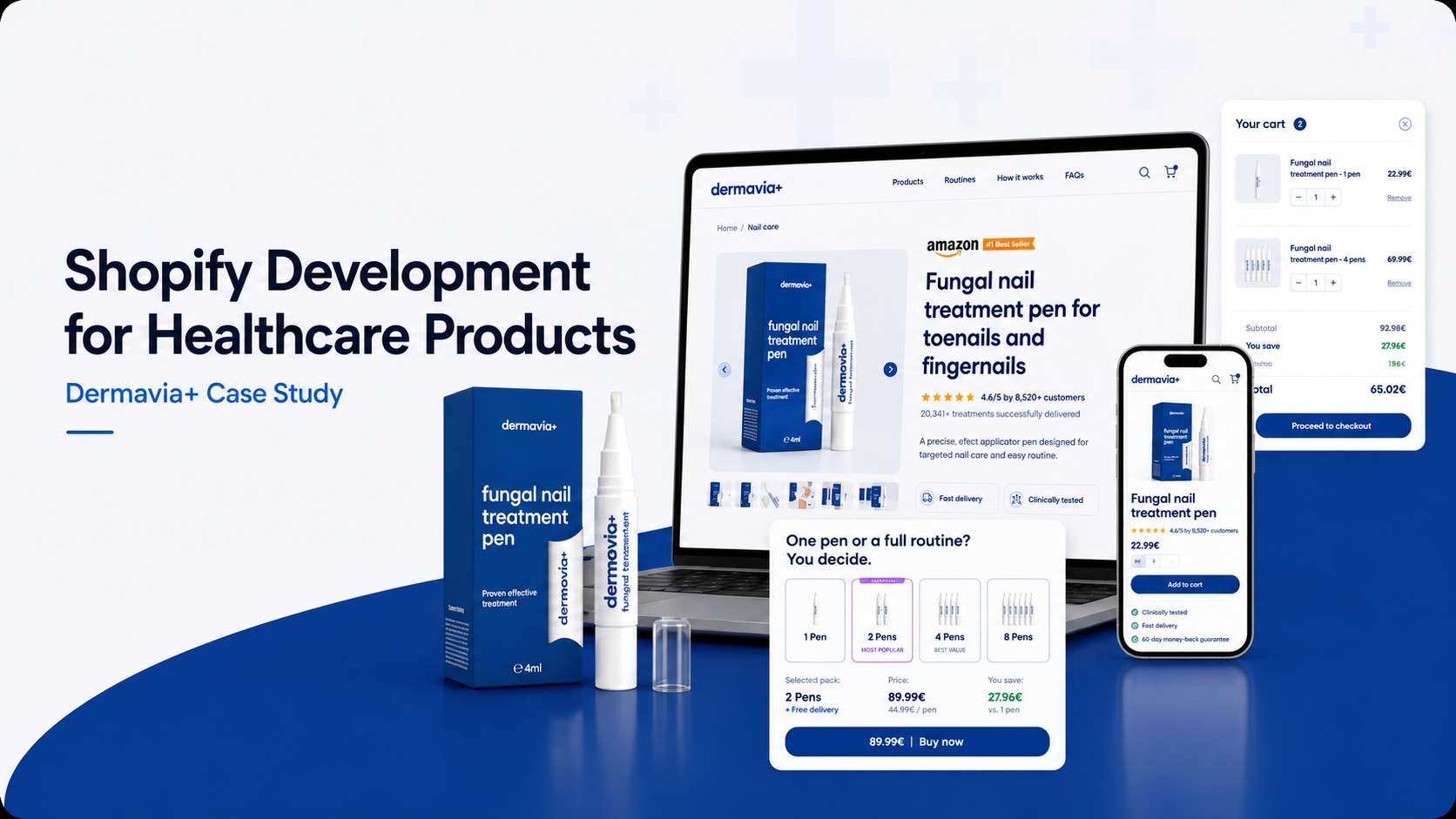
Building a Shopify store for a healthcare product requires more than choosing a theme and adding a product page. Customers need to understand what the product does, how it should be used, why they can trust it, and which purchase option is right for them.
Our work on the Dermavia+ Shopify healthcare case study shows how strategy, UX/UI design, development, and CRO can work together to create a clear ecommerce experience.
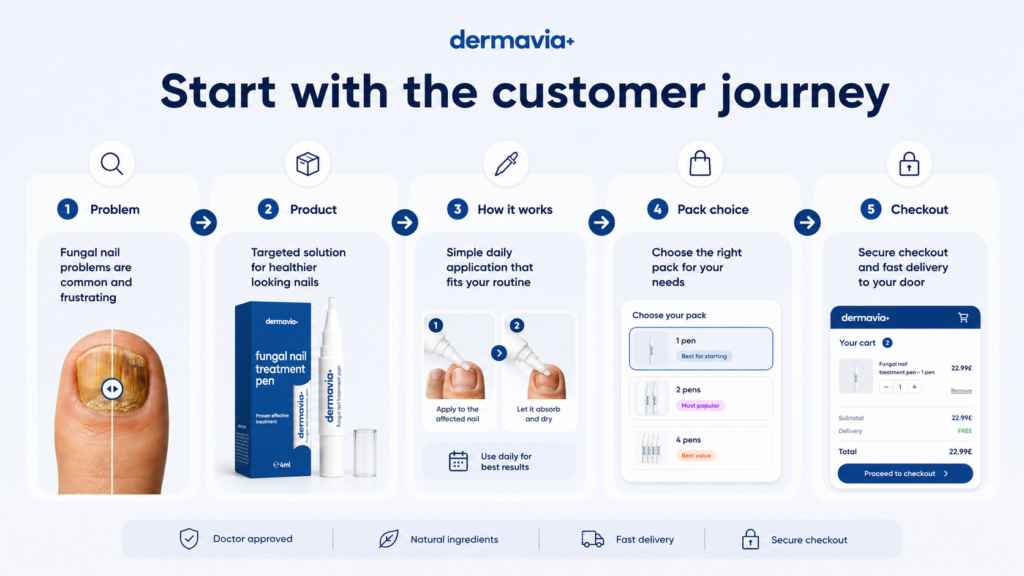
Start with the customer journey
We mapped the main questions a customer might ask, such as: Is this product suitable for me? How does the pen work? What ingredients does it contain? How should it be applied? How many pens should I order? Can I trust the brand?
This organized the website around a logical journey: problem awareness, product explanation, usage instructions, proof, package selection, and checkout.
That is why our projects begin with an ecommerce strategy. Website structure, messaging, product options, and conversion opportunities should be defined before development starts.
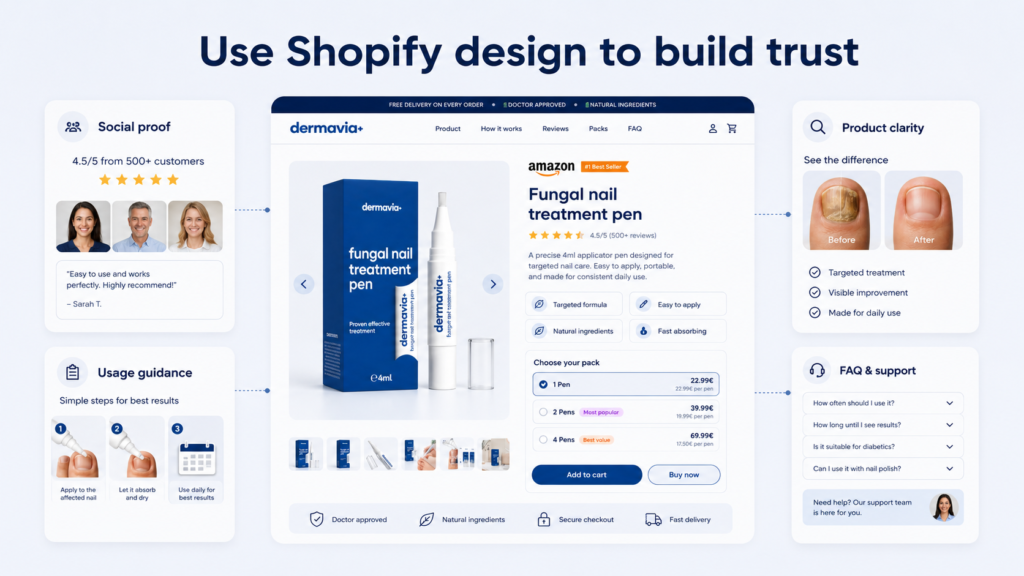
Use Shopify design to build trust
Healthcare product design should feel clear, professional, and easy to understand.
For Dermavia+, the design focused on product close-ups, clear benefits, usage instructions, ingredient information, customer reviews, marketplace proof, FAQs, and visible shipping and return information. Trust elements were placed near the Add to Cart area and repeated throughout the homepage, product page, package selector, and cart.
Our Shopify design services follow the same principle: branding, UX, mobile usability, and CRO should work as one system.
Guide customers through package selection
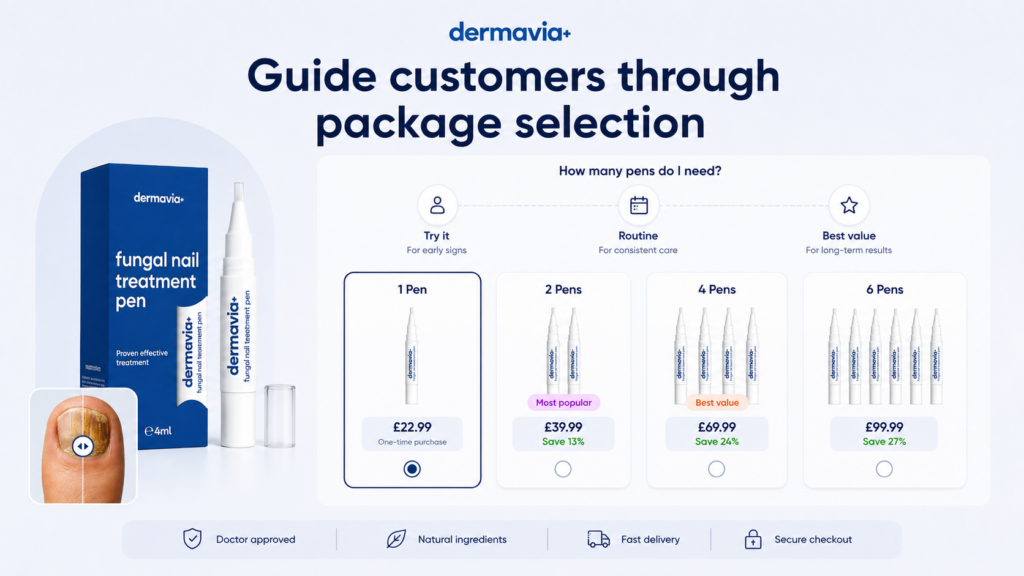
A one-product Shopify store can still require a carefully planned purchase flow. Dermavia+ offered packages of 1, 2, 4, and 6 pens.
Standard quantity buttons would not explain which option a customer should choose. The store therefore needed a “How many pens do I need?” section, package comparisons, savings for larger options, best-value recommendations, and relevant cart suggestions.
These choices made package selection easier and supported AOV growth.
Develop flexible education sections
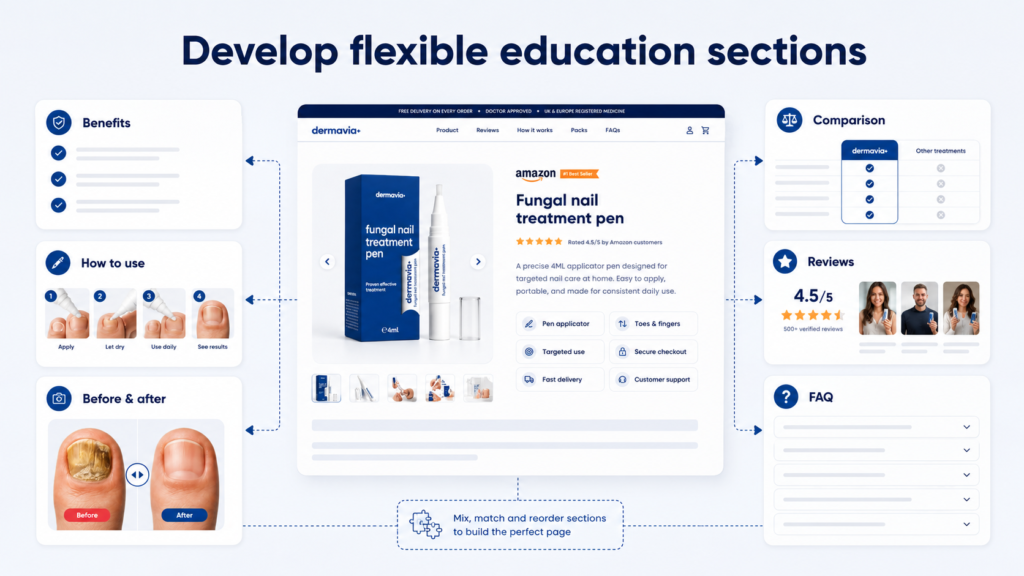
Healthcare stores usually need more educational content than a typical product website. The theme should make this information easy to update and reuse.
For Dermavia+, the structure included the problem and solution, benefits, usage steps, ingredients, reviews, FAQs, package selection, delivery details, and calls to action.
With custom Shopify theme development, these elements can be managed through the theme editor instead of being hard-coded into one page. This gives the brand flexibility to test messaging, update information, and expand the catalog later.
Make the product page mobile-first
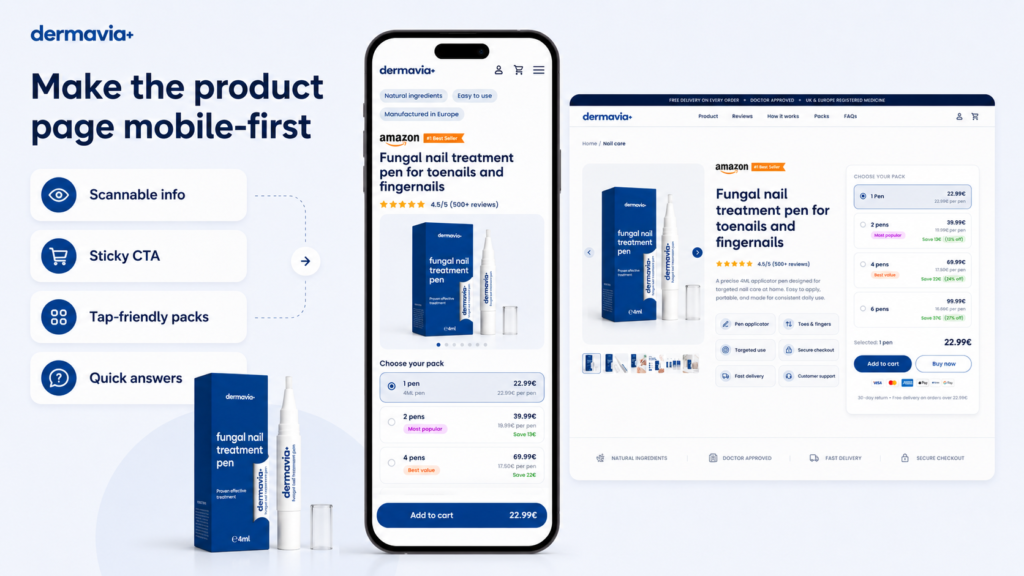
Customers may arrive directly on the product page from Google, advertising, social media, or marketplace research. On mobile, they should quickly understand what the product is, how it works, why they can trust it, and which package to select.
A mobile-first page can use a sticky Add to Cart button, tap-friendly package selection, concise benefit blocks, expandable FAQs, optimized images, and visible delivery information. This reduces uncertainty without forcing customers to read long, unstructured content.
Prepare the store for ongoing CRO
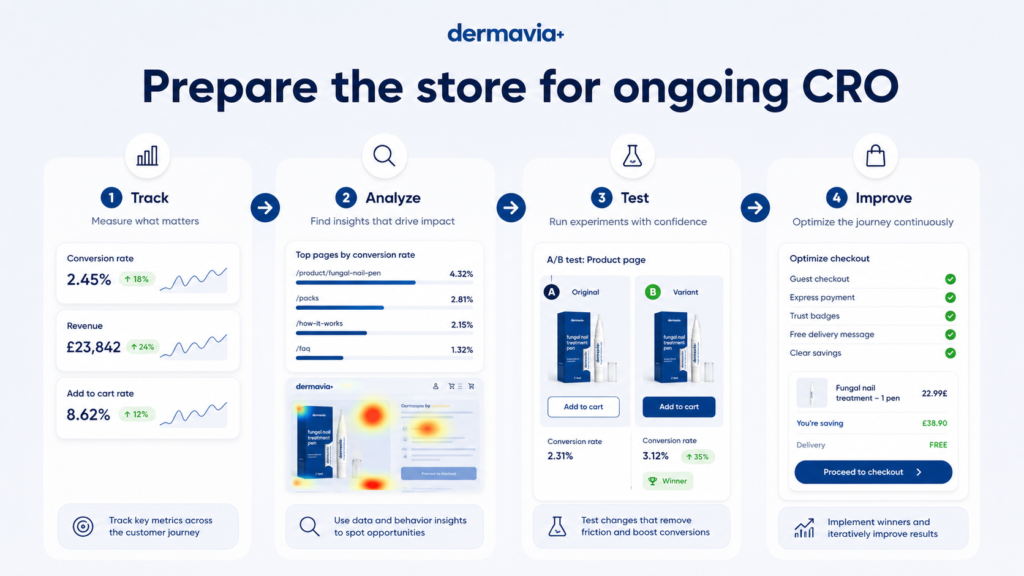
Launching the website is only the first stage. Analytics can show where customers hesitate, which packages they choose, how often they add the product to cart, and where they leave the funnel.
For Dermavia+, the optimization plan included GA4, Google Tag Manager, Microsoft Clarity, Triple Whale, and ongoing CRO hypotheses.
Our Shopify CRO services connect analytics with implementation. We use customer behavior and funnel data to prioritize improvements to product pages, messaging, package selection, cart experience, and mobile usability.
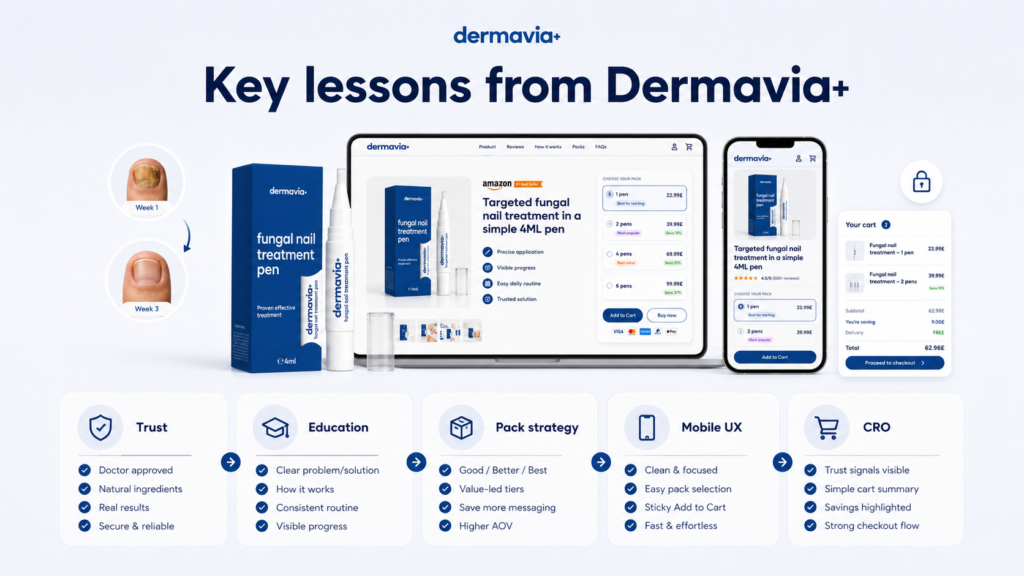
Key lessons from Dermavia+
The main challenge was not simply placing a healthcare product on Shopify. It was transforming a sensitive customer problem into a clear, trustworthy, and easy-to-navigate purchase journey.
The key lessons are to start with customer questions, build education into the structure, place proof close to purchase decisions, use package options to improve AOV, prioritize mobile UX, and prepare analytics for ongoing optimization.
Healthcare Shopify development works best when strategy, design, development, and CRO work together. This creates a stronger foundation for trust, easier purchase decisions, and long-term growth.
Planning a healthcare or wellness Shopify store? Discuss your Shopify project with Webspirit.