
E-Commerce SEO: Boosting Online Store Visibility
E-commerce SEO helps Shopify and online stores reach more customers. Learn core strategies, on-page tactics, technical challenges, and how to avoid pitfalls.
Managing an online store in the United States or Australia means fierce competition for every customer click. Improving your site’s search presence is no longer optional when every product and category must stand out in crowded results. By focusing on e-commerce SEO, you gain strategies tailored specifically for digital storefronts that help attract more organic traffic, increase visibility, and drive genuine growth without relying solely on paid ads.
Table of Contents
- Defining E-Commerce SEO For Online Stores
- Core Components Of E-Commerce SEO Strategies
- Technical SEO And Platform Considerations
- Optimizing Product Listings And Categories
- Common Pitfalls And How To Avoid Them
Key Takeaways
| Point | Details |
|---|---|
| E-Commerce SEO Is Essential | Optimizing an online store’s visibility in search engines requires specialized tactics tailored for product pages rather than relying solely on paid advertising. |
| Focus on Three Pillars | A successful e-commerce SEO strategy must integrate Technical SEO, Content Strategy, and Off-Page SEO to improve online visibility and authority. |
| Regular Audits Are Crucial | Conducting quarterly audits helps identify and fix SEO performance gaps, ensuring continuous improvement in traffic and conversion rates. |
| Avoid Common Pitfalls | Steering clear of keyword stuffing, duplicate content, and poor mobile optimization is key to enhancing user experience and search rankings. |
Defining E-Commerce SEO for Online Stores
E-commerce SEO is a strategic approach to improving an online store’s visibility in search engine results, focusing on techniques that attract potential customers without relying on paid advertising. Unlike traditional website optimization, e-commerce SEO demands specialized tactics tailored specifically to digital storefronts and product pages.
At its core, e-commerce SEO involves optimizing digital stores to increase search visibility through deliberate technical and content-driven strategies. This means carefully crafting product descriptions, improving site architecture, and ensuring search engines can efficiently crawl and understand your online store’s content.
The key components of effective e-commerce SEO include:
- Technical optimization of website structure
- Strategic keyword research focused on product and category pages
- Creating high-quality, unique product descriptions
- Implementing schema markup for enhanced search results
- Building authoritative backlinks from relevant domains
- Improving site speed and mobile responsiveness
Search engine optimization for e-commerce sites requires a multifaceted approach that goes beyond basic website optimization. SEO techniques must account for the unique challenges of online retail, such as managing large product catalogs, handling dynamic pricing, and creating content that converts browsers into buyers.
Pro tip: Regularly audit your product pages for SEO performance, tracking metrics like organic traffic, conversion rates, and search rankings to continuously refine your optimization strategy.
Core Components of E-Commerce SEO Strategies
E-commerce SEO is a comprehensive approach that encompasses multiple strategic elements designed to improve online store visibility and performance in search engine results. Core optimization strategies involve a synergistic blend of technical, content, and popularity-driven techniques that work together to attract and convert potential customers.
The fundamental components of a robust e-commerce SEO strategy can be categorized into three primary pillars:
- Technical SEO optimization
- Content strategy and keyword targeting
- Off-page authority building
Technical SEO forms the foundation of e-commerce optimization, focusing on website infrastructure that enables search engines to efficiently crawl, understand, and index product pages. This includes improving site speed, ensuring mobile responsiveness, implementing clean URL structures, creating comprehensive XML sitemaps, and establishing secure HTTPS connections.
Content strategy represents another critical dimension of e-commerce SEO. SEO techniques demand creating high-quality, unique product descriptions that integrate strategic keywords naturally while addressing potential customer questions and search intent. This involves developing comprehensive category pages, crafting informative blog content, and ensuring each product page offers valuable, original information that distinguishes it from competitors.
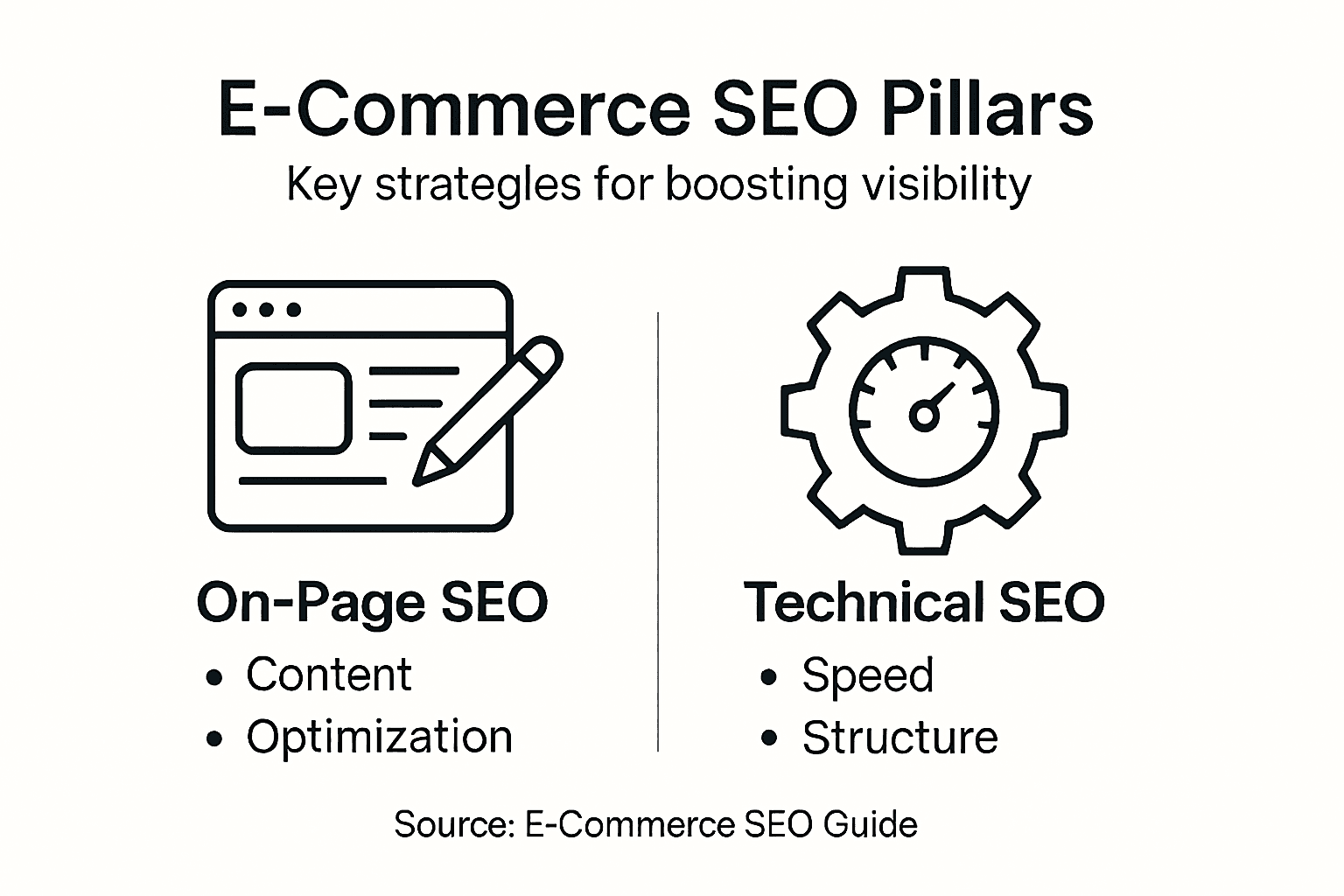
Off-page SEO completes the optimization triad by establishing domain authority through strategic backlink acquisition, social media engagement, and building credible external references. This approach helps search engines recognize the website’s relevance and trustworthiness within its specific market niche.
Here’s a summary comparison of the three pillars of e-commerce SEO:
| Pillar | Main Focus | Typical Tactics |
|---|---|---|
| Technical SEO | Site infrastructure | Speed, mobile, crawlability |
| Content Strategy | Page relevance | Unique descriptions, blog content |
| Off-Page SEO | Site authority | Backlinks, social media signals |
Pro tip: Conduct a quarterly SEO audit to identify and address potential optimization gaps, tracking key performance metrics like organic traffic, conversion rates, and keyword rankings to continuously refine your e-commerce strategy.
Technical SEO and Platform Considerations
E-commerce platforms require meticulous technical optimization to ensure maximum search engine visibility and user experience. Technical SEO fundamentals encompass a comprehensive approach to improving website infrastructure, performance, and search engine compatibility across multiple digital touchpoints.
The critical technical considerations for e-commerce SEO include:
- Site speed and performance optimization
- Mobile responsiveness and design
- Secure website protocols
- Crawlability and indexing efficiency
- Structured data implementation
Website architecture plays a pivotal role in technical SEO, demanding a strategic approach to site structure that enables seamless navigation and efficient search engine crawling. This involves creating logical URL hierarchies, implementing clear internal linking structures, and ensuring that product pages are easily accessible and logically organized.
E-commerce platform design directly impacts both user experience and search engine performance. Technical optimization requires a holistic approach that balances aesthetic design with functional requirements, including fast load times, intuitive navigation, and comprehensive mobile compatibility. Search engines prioritize websites that provide smooth, responsive experiences across different devices and screen sizes.

Securing proper technical infrastructure involves multiple layers of optimization, from implementing robust XML sitemaps and robots.txt files to ensuring comprehensive HTTPS security protocols. These technical elements signal credibility to search engines and create a foundation for improved organic search rankings.
Pro tip: Leverage Google Search Console and page speed analysis tools to identify and address technical SEO issues, conducting monthly audits to maintain optimal website performance and search engine compatibility.
Optimizing Product Listings and Categories
E-commerce success hinges on creating compelling, search-optimized product listings that effectively communicate value and attract potential customers. Product listing optimization requires a strategic approach that balances technical precision with engaging, informative content designed to improve search visibility and user conversion rates.
The essential elements of high-performing product listings include:
- Keyword-rich product titles
- Comprehensive and descriptive content
- High-quality product images
- Clear pricing and availability information
- Detailed product specifications
Semantic search optimization plays a crucial role in improving product discoverability. E-commerce SEO strategies demand creating product descriptions that not only include relevant keywords but also address potential customer questions, highlight unique product features, and provide context that helps search engines understand the product’s value proposition.
Category page optimization is equally critical for e-commerce SEO success. This involves developing logical site hierarchies, creating comprehensive category descriptions, and ensuring that product subcategories are intuitively organized. Effective category structuring helps both users and search engines navigate your online store more efficiently, improving overall site performance and search rankings.
Structured data implementation can significantly enhance product listing visibility. By incorporating schema markup, online stores can provide search engines with detailed product information, enabling rich snippets that make listings more attractive and informative in search results. This approach increases the likelihood of capturing user attention and driving potential customer engagement.
Pro tip: Conduct monthly content audits of your product listings, systematically updating titles, descriptions, and images to maintain relevance and optimize search performance.
Common Pitfalls and How to Avoid Them
Successful e-commerce SEO requires strategic navigation around common mistakes that can dramatically undermine online store performance. E-commerce SEO challenges often stem from well-intentioned but misguided optimization attempts that ultimately harm search rankings and user experience.
The most critical e-commerce SEO pitfalls include:
- Keyword stuffing and unnatural content
- Duplicate product descriptions
- Neglecting mobile optimization
- Slow page loading speeds
- Inconsistent site architecture
- Lack of structured data implementation
Content quality represents a fundamental challenge for online stores. Many businesses mistakenly believe that simply adding more keywords will improve search rankings, when in fact, web analytics strategies demand nuanced, user-focused content that genuinely addresses customer needs. This means creating unique, comprehensive product descriptions that provide real value beyond basic specifications.
Technical optimization requires a holistic approach that goes beyond surface-level fixes. E-commerce sites must implement robust technical infrastructure, including responsive design, fast loading times, secure protocols, and clean URL structures. These elements not only improve search engine visibility but also enhance user experience, creating a virtuous cycle of improved engagement and rankings.
Below is a reference table outlining common e-commerce SEO pitfalls and their potential effects:
| Pitfall | Negative Impact | Solution |
|---|---|---|
| Keyword stuffing | Lower rankings, poor UX | Use natural language |
| Duplicate descriptions | Cannibalized rankings | Write unique content |
| Ignoring site speed | Increased bounce rate | Optimize images, code |
| Poor mobile design | Lost mobile traffic | Implement responsive layouts |
Pro tip: Implement a quarterly SEO audit process that systematically reviews and updates your website’s content, technical performance, and optimization strategies to proactively identify and address potential performance issues.
Unlock Your Online Store’s Full Potential with Expert E-Commerce SEO
Struggling to boost your Shopify store’s visibility or dealing with slow site speed and duplicate content issues described in the article E-Commerce SEO Boosting Online Store Visibility We understand how critical it is to implement tailored technical SEO and compelling product listings to convert visitors into customers Our team at Webspirit Agency specializes in Shopify design development and comprehensive e-commerce SEO solutions that address these exact challenges

Take control of your store’s search rankings and user experience now Partner with our experts who focus on conversion rate optimization and cutting-edge SEO strategies designed to increase organic traffic and drive sales Visit Webspirit Agency to learn how our proven approach can transform your online business Start growing today with practical, personalized support from the professionals who know how to deliver results
Frequently Asked Questions
What is e-commerce SEO?
E-commerce SEO is a strategy aimed at improving an online store’s visibility in search engine results through optimization techniques designed specifically for digital storefronts and product pages, without relying on paid advertising.
How can I optimize product listings for better search visibility?
To optimize product listings, use keyword-rich titles, create unique and comprehensive descriptions, provide high-quality images, and include clear pricing and availability information. Ensuring your content answers potential customer questions can also enhance discoverability.
What technical aspects should I focus on for e-commerce SEO?
Key technical aspects include optimizing site speed and performance, ensuring mobile responsiveness, implementing secure HTTPS protocols, enhancing crawlability and indexing efficiency, and using structured data to improve search engine understanding of your content.
How often should I conduct SEO audits for my online store?
It’s recommended to conduct quarterly SEO audits to identify and address potential optimization gaps. Regularly track key performance metrics like organic traffic, conversion rates, and keyword rankings to refine your strategy continuously.
Recommended
Latest News

Top 7 shopifyecomsolutions.com Alternatives in 2026
Discover 7 shopifyecomsolutions.com alternatives for 2026. Compare top options for your e-commerce success.

7-Step Shopify Optimization Checklist for Higher Sales
Discover the ultimate shopify optimization checklist with 7 key strategies for boosting performance and sales. Perfect guide for e-commerce managers.
CRO for Clothing Brands: How to Scale Your Shopify Store and Improve Conversions
CRO for Clothing Brands: How to Scale Your Shopify Store and Improve Conversions

E-Commerce SEO: Boosting Online Store Visibility
E-commerce SEO helps Shopify and online stores reach more customers. Learn core strategies, on-page tactics, technical challenges, and how to avoid pitfalls.