
Blog SEO for Shopify: Drive Traffic and Sales Step-by-Step
Learn blog seo for shopify with this practical guide. Follow the step-by-step process to set up, optimize, and verify your blog for more traffic and sales.
Building a Shopify store is only part of the challenge for American and Australian entrepreneurs aiming for real e-commerce growth. Getting your blog content in front of motivated buyers takes more than just intuition—it demands a strategic approach to SEO that helps your store stand out and attract the right audience. You will find actionable strategies for keyword research, site structure, and engaging blog content to drive targeted traffic and improve sales conversions.
Table of Contents
- Step 1: Research SEO Keywords for Your Shopify Blog
- Step 2: Optimize Blog Structure and On-Page Elements
- Step 3: Create Valuable SEO-Friendly Blog Content
- Step 4: Enhance Internal Linking and User Navigation
- Step 5: Monitor Performance and Refine Strategies
Quick Summary
| Key Insight | Explanation |
|---|---|
| 1. Conduct Thorough Keyword Research | Use tools to find valuable keywords that align with user intent and product relevance for better traffic. |
| 2. Optimize Blog Structure | Develop a clear content hierarchy and user-friendly navigation to enhance both search engine visibility and user experience. |
| 3. Create High-Quality Blog Content | Write engaging and informative posts that address audience needs, using strategic keyword placement and multimedia elements. |
| 4. Improve Internal Linking | Establish logical connections between posts and product pages to aid navigation and boost SEO performance. |
| 5. Continuously Monitor Performance | Regularly track metrics to refine SEO strategies and foster long-term growth based on real-time data insights. |
Step 1: Research SEO Keywords for Your Shopify Blog
Discovering the right keywords is crucial for driving targeted traffic to your Shopify blog and improving your search engine rankings. In this step, you’ll learn how to strategically research keywords that will help potential customers find your online store.
Start by understanding how relevant keywords can optimize your store. Keyword research involves identifying specific terms and phrases your target audience uses when searching for products or information related to your business. The goal is to uncover search terms with good volume and reasonable competition.
Here are effective strategies for finding the right keywords:
- Use keyword research tools like Google Keyword Planner, SEMrush, or Ahrefs
- Analyze search volume and competition for each potential keyword
- Look for long-tail keywords specific to your niche
- Consider user intent behind search queries
- Include both informational and transactional keywords
Focus on keywords that demonstrate clear commercial intent and match your product offerings. These might include specific product names, feature-related phrases, or solution-oriented search terms.
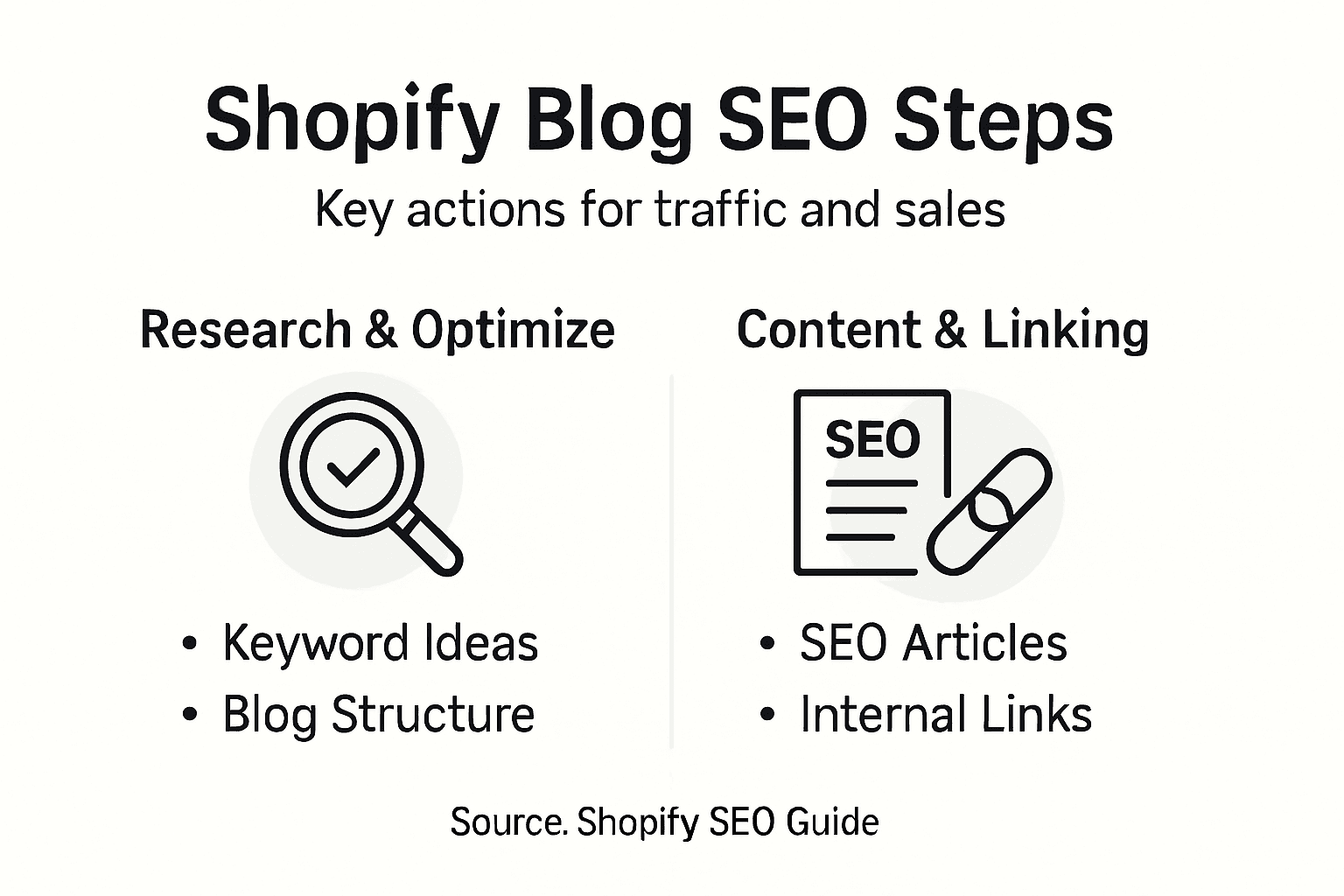
Compare popular keyword research tools for Shopify blogs:
| Tool Name | Unique Advantage | Ideal For |
|---|---|---|
| Google Keyword Planner | Free access to broad data | Beginners and startups |
| SEMrush | Comprehensive SEO analysis | Data-driven marketers |
| Ahrefs | Deep backlink insights | Advanced SEO users |
Pro tip: Target keywords with a balance between search volume and competition to maximize your blog’s visibility.
Pro tip: Always prioritize keywords that demonstrate genuine user interest and align closely with your Shopify store’s products and content strategy.
Step 2: Optimize Blog Structure and On-Page Elements
Improving your Shopify blog’s structure and on-page elements is critical for enhancing search engine visibility and user experience. This step focuses on strategic optimization techniques that will help search engines understand and rank your content more effectively.
Shopify provides a solid foundation for SEO, and you can further improve your site by implementing strategic site optimization techniques. Pay close attention to several key areas that can significantly impact your blog’s performance:
- Create a logical content hierarchy
- Use descriptive and concise menu titles
- Organize navigation menus intuitively
- Develop clean, readable URLs
- Apply meaningful anchor text for internal links
- Use descriptive image filenames before uploading
Focus on creating a clear and intuitive site structure that helps both search engines and users navigate your content effortlessly. This means arranging your blog posts into logical categories, using headings that accurately describe content, and ensuring each page has a specific purpose.
Effective site structure transforms complex information into an easily digestible format for search engines and readers.
Pro tip: Regularly audit your blog’s structure and navigation to ensure it remains user-friendly and aligned with your current content strategy.

Step 3: Create Valuable SEO-Friendly Blog Content
Crafting compelling blog content is your gateway to attracting organic traffic and engaging potential customers for your Shopify store. This step will guide you through creating blog posts that not only rank well in search engines but also provide genuine value to your readers.
Start by developing strategic blog content that drives traffic with a clear focus on your target audience’s interests and search behaviors. Effective blog writing requires a multifaceted approach that balances SEO techniques with high-quality, informative content:
- Identify your target audience precisely
- Choose topics that align with customer interests
- Conduct thorough keyword research
- Create engaging and original content
- Use strategic keyword placement
- Incorporate internal and external links
- Add original multimedia elements
When writing your blog posts, focus on creating comprehensive and actionable content that directly addresses your readers’ questions and pain points. This means going beyond surface-level information and providing deep, valuable insights that demonstrate your expertise.
Exceptional blog content transforms casual readers into potential customers by delivering genuine value and solving real problems.
Pro tip: Develop a content calendar that balances SEO optimization with storytelling to maintain consistent, high-quality blog posts that resonate with your audience.
Step 4: Enhance Internal Linking and User Navigation
Improving internal linking is a critical strategy for boosting your Shopify store’s SEO performance and creating a seamless user experience. By strategically connecting your blog content and product pages, you’ll help both search engines and visitors navigate your site more effectively.
Learn how to optimize internal linking for better SEO by implementing a thoughtful approach to site architecture. Effective internal linking involves more than just connecting pages randomly – it requires a deliberate strategy that supports both user navigation and search engine crawling:
- Create a logical site hierarchy
- Use descriptive and relevant anchor text
- Link to related content naturally
- Distribute link equity across important pages
- Prioritize user experience and information flow
- Connect blog posts with relevant product pages
- Maintain a balanced internal linking structure
Focus on creating meaningful connections between content that provide genuine value to your readers. This means linking to pages that offer additional context, solve related problems, or provide deeper insights into the topics you’re discussing.
Strategic internal linking transforms your website from a collection of pages into an interconnected ecosystem of valuable information.
Pro tip: Periodically audit your internal links to ensure they remain relevant and continue to provide a smooth, intuitive navigation experience for your visitors.
Step 5: Monitor Performance and Refine Strategies
Successful blog SEO is an ongoing process that requires consistent tracking and strategic adjustments. By systematically analyzing your Shopify store’s performance, you’ll be able to identify what works and continuously improve your content strategy.
Track your SEO performance metrics using a comprehensive approach that goes beyond surface-level data. Understanding the nuanced indicators of your blog’s success will help you make informed decisions:
- Monitor organic traffic trends
- Track search result rankings
- Analyze user engagement metrics
- Review bounce rates and session durations
- Measure sales from organic search
- Assess backlink profile quality
- Compare performance against benchmarks
Focus on developing a data-driven optimization strategy that responds to real performance insights. This means regularly reviewing your analytics, understanding the story behind the numbers, and being willing to experiment and adapt your approach.
Continuous performance monitoring transforms SEO from a static strategy into a dynamic, responsive system of growth.
Pro tip: Set up automated monthly reporting to create a consistent rhythm of analysis and strategic refinement for your Shopify blog SEO efforts.
Here’s a summary of how each SEO step benefits your Shopify blog:
| Step | Primary Goal | Key Business Benefit |
|---|---|---|
| Research Keywords | Identify valuable search terms | Boosts qualified traffic |
| Optimize Structure | Enhance site organization | Improves user experience |
| Create Content | Craft engaging blog posts | Builds audience trust |
| Internal Linking | Strengthen page connections | Raises SEO authority |
| Monitor Performance | Analyze and adjust tactics | Maximizes long-term growth |
Take Your Shopify Blog SEO to the Next Level With Expert Support
Struggling to turn your keyword research, site structure, and internal linking efforts into real traffic and sales Growth? Many Shopify store owners face challenges in executing a comprehensive SEO strategy that not only attracts visitors but also converts them. The crucial steps outlined in “Blog SEO for Shopify Drive Traffic and Sales Step by Step” emphasize targeted keywords, optimized blog structure, valuable content, and strategic linking. Yet without the right expertise these steps can feel overwhelming and time-consuming.
Our Shopify design and development agency specializes in helping you overcome these pain points. We deliver tailored e-commerce SEO solutions and conversion rate optimization designed to boost your organic traffic and maximize your store’s sales potential. Discover how partnering with us at Webspirit Agency can transform your blog into a powerful growth engine. Start now by exploring our Shopify SEO services and unlock the true potential of your online store with a strategy built to perform.
Frequently Asked Questions
How can I find the right keywords for my Shopify blog?
To find the right keywords, use keyword research tools to identify terms your target audience is searching for. Focus on long-tail keywords with manageable competition that relate directly to your products.
What are some ways to optimize my Shopify blog’s structure for SEO?
To optimize your blog’s structure, create a logical hierarchy with clear navigation menus and concise URLs. Organize your blog posts into categories that reflect your content, making it easy for users and search engines to find relevant information.
How can I create engaging SEO-friendly content for my Shopify blog?
You can create engaging content by identifying your target audience and choosing topics that resonate with their interests. Ensure to incorporate well-researched keywords naturally and provide substantial insights that address their questions or pain points.
What is internal linking, and why is it important for my Shopify blog?
Internal linking connects various pages of your blog, enhancing user navigation and distributing SEO authority throughout your site. Implement a strategic internal linking plan by linking related blog posts with relevant product pages to improve both user experience and search rankings.
How often should I monitor my blog’s SEO performance?
You should monitor your blog’s SEO performance regularly, at least once a month, to track organic traffic and user engagement metrics. Set up automated reports to review key performance indicators and adjust your strategies based on the data gathered.
How can I ensure my blog content continues to drive traffic and sales over time?
To maintain traffic and sales, continually assess and refine your SEO strategies based on performance metrics. Regularly update your content, and experiment with different approaches to see what resonates best with your audience, aiming for consistent quality updates every few weeks.
Recommended
Latest News

Top 7 shopifyecomsolutions.com Alternatives in 2026
Discover 7 shopifyecomsolutions.com alternatives for 2026. Compare top options for your e-commerce success.

7-Step Shopify Optimization Checklist for Higher Sales
Discover the ultimate shopify optimization checklist with 7 key strategies for boosting performance and sales. Perfect guide for e-commerce managers.
CRO for Clothing Brands: How to Scale Your Shopify Store and Improve Conversions
CRO for Clothing Brands: How to Scale Your Shopify Store and Improve Conversions

E-Commerce SEO: Boosting Online Store Visibility
E-commerce SEO helps Shopify and online stores reach more customers. Learn core strategies, on-page tactics, technical challenges, and how to avoid pitfalls.